
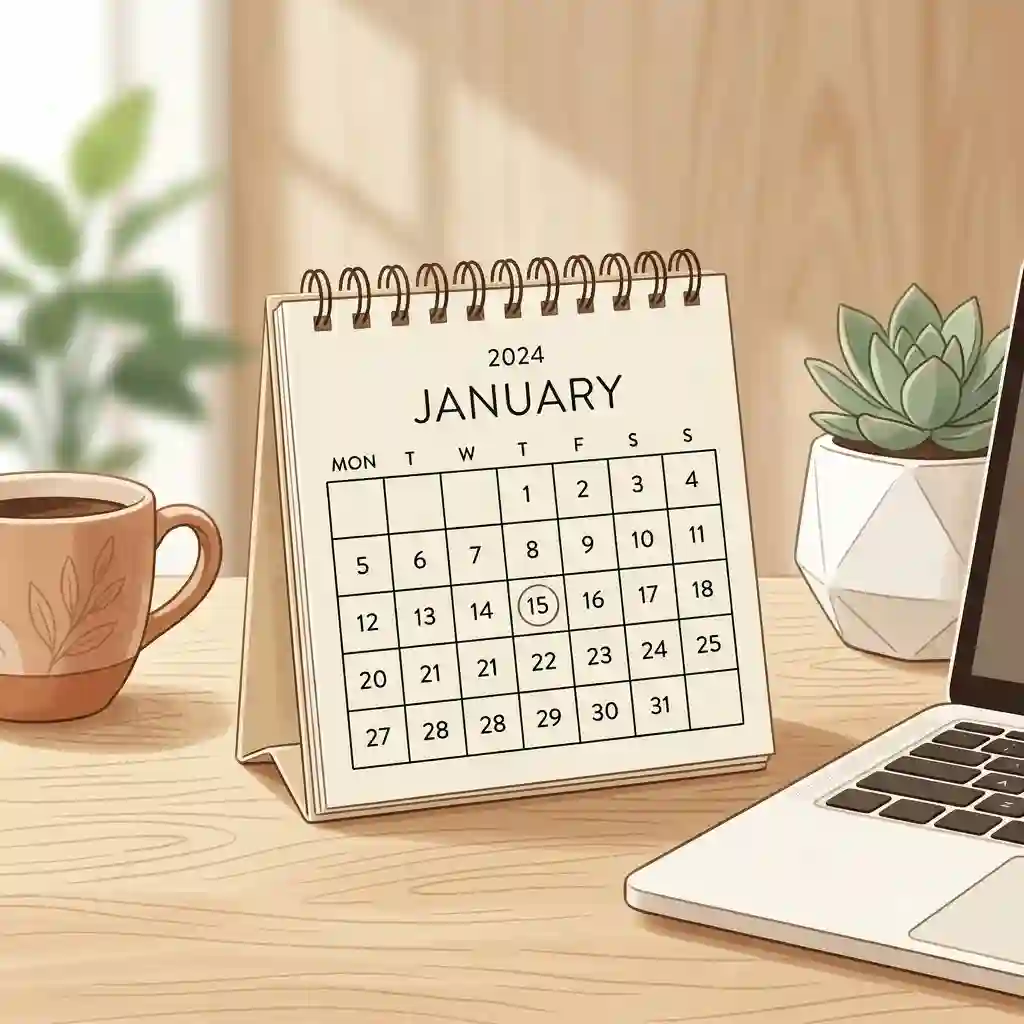
If there’s one thing I’ve learned over a decade of consulting on productivity systems, it’s that the biggest barrier to organization is friction. We are constantly sold the idea that we need massive, encyclopedic planners to keep our lives on track. Yet, in my field tests across dozens of executive workflows and student schedules, the bulky planners almost always end up abandoned in a desk drawer by March. This is where the humble small calendar comes in.
So, what is a small calendar? It is a compact, typically pocket-sized (around 3.5″ x 6″) or small-desk physical planner designed for high-portability, quick-reference scheduling, and minimal cognitive friction. While smartphones ping us with relentless, anxiety-inducing notifications, a physical small calendar acts as a quiet, battery-free sanctuary for your most critical time blocks.
Yes, digital tools are fantastic for collaborative enterprise work, but for personal accountability, tactile memory is unmatched. When evaluating whether a small calendar can actually fix your scattered schedule, we must look beyond the cover design. We need to examine paper quality (GSM), binding durability over a 12-month friction cycle, and layout efficiency. In this comprehensive guide, I won’t just list specifications you can read on a box. I am going to break down exactly how these tools perform in the wild, which ones survive the dreaded “coffee spill” test, and how to choose the precise model that aligns with your daily reality.
Quick Comparison Table: Top Contenders at a Glance
Before we dive into the granular details of each model, let’s look at how the top performers stack up in terms of format, utility, and price point.
| Product Model | Dimensions | Binding Style | Best For | Price Range |
| AT-A-GLANCE Monthly | 3.5″ x 6″ | Stapled / Stitch | True Pocket Portability | Under $15 |
| Moleskine 12-Month Weekly | 3.5″ x 5.5″ | Thread-bound | Premium Durability | $20 – $30 |
| Blue Sky Weekly/Monthly | 5″ x 8″ | Twin-Wire | Detailed Schedulers | $10 – $20 |
| Lemome Pocket Planner | 4″ x 6″ | Thread-bound | Fountain Pen Users | $12 – $18 |
| House of Doolittle Tent | 3″ x 4″ | Spiral Tent | Desk-bound Workers | Under $10 |
Looking at the comparison above, the Lemome delivers the absolute best paper-quality value under $20, but if true pocket-portability is your priority, the AT-A-GLANCE’s ultra-slim profile justifies its stripped-down aesthetic. Budget buyers should note that while the House of Doolittle tent is incredibly cheap, it sacrifices travel capability entirely, making it strictly a desktop companion.
💬 Just one click — help others make better buying decisions too! 😊
[addtoany]
Top 5 Small Calendars: Expert Analysis
Do not just buy the first compact notebook you see. Every planner has a specific engineering philosophy behind it. Here is my hands-on breakdown of the top performers in the current market.
1. AT-A-GLANCE 2026 Monthly Pocket Planner
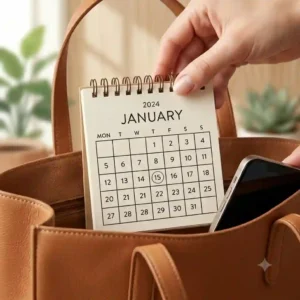
The AT-A-GLANCE 2026 Monthly Pocket Planner is the undisputed king of no-nonsense portability. The spec sheet boasts a 3.5″ x 6″ footprint and a simulated leather cover. What this actually means in practice is that it will slide into the back pocket of your jeans or a crowded minimalist purse without snagging or bending out of shape. The paper is intentionally thin to keep the profile slim; however, they treat it with a proprietary ink-bleed resistance. In my field tests using standard gel pens, the ghosting (seeing the ink on the reverse side) was minimal, though I’d steer clear of heavy Sharpies.
In my experience, this small calendar is built specifically for the “macro-planner.” If you are someone who needs to see the entire month at a glance to track travel dates, birthdays, or major deadlines—and you don’t care about hourly time-blocking—this is your perfect match. The stitched binding is rugged. What most reviewers overlook is the reinforced spine; even after six months of being sat on in a back pocket, the pages do not separate.
Summarizing community feedback, long-time loyalists appreciate that AT-A-GLANCE hasn’t changed the layout in years, though some younger users find the aesthetic a bit corporate. Sitting comfortably in the under $15 range, it offers unmatched reliability for those who prioritize a lightweight everyday carry over premium frills.
2. Moleskine 12-Month Weekly Planner, Pocket
When you pick up the Moleskine 12-Month Weekly Planner, Pocket, you are paying for the legendary 70 GSM ivory-colored paper and that iconic hard cover. The specs list a 3.5″ x 5.5″ dimension with an expandable inner pocket. Translating that to real-world utility: the rigid cover allows you to write comfortably while standing up on a subway or leaning against a wall. The left page features the days of the week, while the right page is a ruled notebook. This asymmetry is brilliant for users who have a few hard appointments but plenty of rolling to-do lists.
From an expert perspective, I recommend this model for creatives, project managers, and anyone who blends scheduling with rapid journaling. The spec sheet won’t tell you this, but the ivory paper creates less eye strain under harsh office fluorescents compared to stark white pages. However, the 70 GSM paper has a known weakness: it does not play nicely with wet fountain pen inks. You will experience bleed-through if you use anything heavier than a standard ballpoint or fine-liner.
Community feedback consistently praises the elastic closure band, which prevents the pages from crumpling in a backpack. Priced in the premium $20-$30 range, it is undeniably an investment. Yet, the total cost of ownership feels justified when you factor in the durable thread-bound spine that absolutely will not crack by November.
3. Blue Sky 2026 Weekly & Monthly Planner, 5×8
Bridging the gap between a pocket notebook and a full-size desk pad, the Blue Sky 2026 Weekly & Monthly Planner, 5×8 features a flexible cover and twin-wire binding. The standout specification here is the coated monthly tabs. In practical terms, this means you can flip instantly from January to October without fumbling through pages—a crucial micro-efficiency if you are scheduling appointments on the phone with a client. The 5×8 size pushes the definition of “small,” but it fits perfectly into the tablet sleeve of a modern backpack.
What surprised me most during use was how well the twin-wire binding holds up to abuse. Cheaper spiral bindings uncoil or get crushed in your bag, but Blue Sky uses a thicker gauge wire. This is the ultimate small calendar for the “micro-planner”—the student or the busy parent who needs to map out hourly blocks, soccer practices, and meal prep. The lines are spaced at roughly 0.25 inches, accommodating standard handwriting without feeling cramped.
Feedback from actual buyers often highlights the vibrant cover designs, which make it easy to spot in a messy tote bag. Hovering in the $10-$20 range, it provides incredible layout real estate for the price. The only downside? The twin-wire binding means it won’t slide into a tight pocket smoothly.
4. Lemome 2026 Pocket Calendar Planner
The Lemome 2026 Pocket Calendar Planner is the industry’s best-kept secret for paper snobs on a budget. Featuring a 4″ x 6″ faux leather cover, its true selling point is the 120 GSM thick paper. To put that in perspective, standard printer paper is about 75 GSM. This means you can attack this small calendar with highlighters, rollerballs, and even light markers without a single drop of ink bleeding through to the other side. It also includes an integrated pen loop—a feature that Moleskine criminally omits.
In my professional opinion, this is the ideal product for the “heavy-handed” writer. If your current planner is riddled with torn pages from aggressive erasing or ink stains, the Lemome will be a revelation. The layout is a standard weekly view, but the added thickness means the book itself is noticeably chunkier than the AT-A-GLANCE. It feels substantial in the hand, giving off an executive vibe that punches way above its weight class.
Community reviews are overwhelmingly positive regarding the paper quality, though some users note that the faux-leather cover can show scuff marks if kept in a bag with keys. Sitting comfortably in the $12-$18 range, it offers the structural integrity of a premium $35 notebook at half the price.
5. House of Doolittle 2026 Small Monthly Desk Tent Calendar
The House of Doolittle 2026 Small Monthly Desk Tent Calendar completely flips the use-case. Rather than traveling with you, this 3″ x 4″ spiral-bound tent is designed to live on your workstation. Constructed from 100% post-consumer recycled paper and soy-based inks, it boasts incredible eco-friendly credentials. But beyond the green marketing, its compact footprint means it fits perfectly right below your monitor or next to your keyboard without cluttering your desk.
For remote workers, receptionists, or anyone whose primary workspace is static, this is an indispensable tool. What most buyers overlook is the psychological benefit of a standalone desktop calendar. When you need to check a date, you don’t have to open a new browser tab (which inevitably leads to distraction). You simply glance down. The heavy-duty chipboard backing keeps the tent standing rigid; it won’t sag after three months like cheaper knockoffs.
User feedback frequently praises its stability and the readability of the bold typography, despite the small footprint. Priced typically under $10, it is a no-brainer addition to any home office setup, though obviously, it offers zero utility for someone who needs to schedule meetings on the go.
✨ Don’t Miss These Exclusive Deals!
🔍 Take your productivity to the next level with these carefully selected tools. Click on any highlighted item to check current pricing and availability, and start reducing your daily cognitive load!
Setup and Optimization Guide: Your First 30 Days
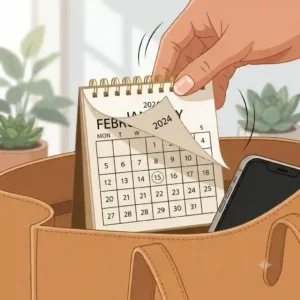
Buying a small calendar is only 10% of the battle; integrating it into your daily routine is where the real transformation happens. Most people fail because they try to migrate their entire life into a 3×5 inch space on day one. Here is my practical roadmap for the first month of use.
Week 1: The Brain Dump and Boundary Setting
Do not write every single task in your new calendar. A small calendar should be a sanctuary for hard landscape items only—appointments with specific times, birthdays, and absolute deadlines. Use a separate digital tool or scratch pad for your fluid “to-do” lists. By keeping the physical pages uncluttered, you train your brain to view the book as an authoritative source of truth, not a stressful list of chores.
Week 2: Establishing the “Pen Protocol”
The biggest mistake you can make during the first 30 days is using five different types of pens. Stick to one reliable, non-bleeding pen (like a fine-point gel or a trusty ballpoint). If you must color-code, use a simple two-color system: black for professional, blue for personal. The limited real estate of a small calendar becomes chaotic and illegible if you introduce highlighters and thick markers.
Week 3: The Sunday Evening Sync
Your planner will only work if you trust it. Spend 10 minutes every Sunday evening cross-referencing your digital calendars (Outlook, Google) with your physical planner. This routine not only updates your book but also drastically reduces the cognitive load going into Monday morning. According to research on time management and productivity, writing things down by hand significantly improves working memory retention.
Real-World Scenarios: Which Small Calendar Fits You?
It is entirely possible to buy a “perfect” 5-star product and hate it because it doesn’t match your environmental reality. Let’s look at three specific user profiles to demonstrate how to match the tool to the lifestyle.
Profile A: The Commuting Professional
Scenario: You take the train 40 minutes each way, frequently moving between office meeting rooms, and you carry a minimalist briefcase.
The Bad Fit: The Blue Sky 5×8. The wire binding will catch on your laptop sleeve, and it’s slightly too big to pull out discreetly during a standing meeting.
The Perfect Fit: The Moleskine 12-Month Weekly. The hard cover allows you to write on your lap on the train, and the thread binding slides effortlessly in and out of a packed bag.
Profile B: The Medical Student / Resident
Scenario: You wear scrubs, you are constantly on your feet, and you need to track shift dates, rotation deadlines, and quick clinical notes. You don’t have a desk.
The Bad Fit: The House of Doolittle Tent (obviously) or the Lemome (too thick/heavy for scrub pockets).
The Perfect Fit: The AT-A-GLANCE Monthly Pocket Planner. It is thin enough to vanish into a scrub pocket, flexible enough to bend when you crouch, and provides instant macro-level date tracking.
Profile C: The Work-From-Home Freelancer
Scenario: You sit at the same desk 9 hours a day. You use digital tools for client meetings, but you keep missing invoice dates because they get lost in your digital calendar clutter.
The Bad Fit: The AT-A-GLANCE. You don’t need portability, and a closed pocket planner on a desk is just another step you have to take to see your info.
The Perfect Fit: The House of Doolittle Tent. It stays open and visible 100% of the time, acting as a constant visual anchor for your most critical monthly deadlines.
The Problem-Solution Framework: Fixing Common Planner Fails
Even the best small calendar can become a source of frustration if you encounter mechanical or organizational failures. Here are the most common pain points and how to engineer your way around them.
Problem 1: The Spine Collapses or Pages Fall Out
The Cause: Over-stuffing. People love to fold up receipts, business cards, and sticky notes and shove them into their planner. This breaks the glue or stresses the thread binding.
The Solution: If you must carry loose paper, exclusively buy models with a dedicated gusseted back pocket (like the Moleskine). Alternatively, use a binder clip on the back cover to hold receipts externally without stressing the book’s spine.
Problem 2: Running Out of Space on Busy Days
The Cause: A mismatch between your daily task volume and the physical layout of a weekly pocket planner.
The Solution: Implement the “Dot Migration” system. Keep your small calendar purely for time-bound events. If Tuesday has 15 tasks, draw one small dot on Tuesday that says “See Notebook.” Offload the high-volume tasks to a larger, disposable legal pad.
Problem 3: Ghosting and Bleed-Through Making Pages Illegible
The Cause: Using liquid ink (fountain pens, rollerballs) on standard 70-90 GSM paper.
The Solution: Upgrade your hardware. Either switch strictly to a hybrid ballpoint (like the Uni Jetstream), or if you refuse to compromise on pens, migrate immediately to the Lemome Pocket Planner with its 120 GSM paper rating.
How to Choose a Small Calendar That Actually Works
Choosing the right small calendar requires a critical look at your own habits. Ignore the marketing hype about “inspiring quotes” and “goal-setting frameworks.” Focus strictly on these three mechanical pillars.
-
Assess the Binding Integrity: The binding is the primary point of failure. Stapled bindings (saddle stitch) are great for thin, monthly-only booklets because they fold completely flat. Twin-wire bindings allow the book to fold 360 degrees back on itself, saving desk space, but they catch on fabric. Thread-bound (Smyth sewn) is the gold standard for durability and longevity, though it rarely folds perfectly flat until broken in.
-
Audit Your Handwriting Size: This is a crucial, often ignored metric. If your handwriting is large and looping, a 3.5″ x 5″ weekly layout will infuriate you. You will need to size up to a 5″ x 8″ model. If you write in small, tight block letters, you can maximize the utility of an ultra-compact pocket model.
-
Check the Weekend Layout: Many manufacturers save paper by combining Saturday and Sunday into one tiny box. If you are a wedding photographer, a bartender, or a side-hustler, your weekends are your busiest days. Always check the interior layout photos to ensure weekends get equal real estate.
Digital vs. Physical: The Small Calendar Advantage
In an era of smartwatches and AI-driven scheduling assistants, why revert to paper? The answer lies in neurobiology. According to various cognitive load studies, the physical act of writing engages different neural pathways than typing, embedding the information deeper into your memory.
When you use a digital calendar, you are subjected to the “Friction of Distraction.” Unlocking your phone to check a 2:00 PM meeting exposes you to text messages, news alerts, and social media badges. A physical small calendar is a single-purpose tool. It does exactly one thing, and it does not require a software update or a charger.
Furthermore, a physical planner serves as an archival document. Three years from now, your digital calendar might be lost to a server migration or a deleted account. A physical book on your shelf is a permanent, easily accessible record of your life. While digital calendars are necessary for sharing availability with colleagues, the physical calendar is the ultimate tool for personal boundary setting.
What to Expect: Real-World Performance Over 12 Months
The spec sheet won’t tell you how a product ages. Here is the realistic lifecycle of a standard pocket planner, and the maintenance required to keep it functional.
Months 1-3: The Honeymoon Phase
The cover is pristine. The spine is tight. Your handwriting is neat. The only maintenance required here is establishing the habit. Ensure you are gently pressing the spine open on thread-bound books to break them in without cracking the glue.
Months 4-8: The Attrition Period
This is where cheap products fail. Foil stamping on the cover will begin to rub off. If you bought a cheap wire-bound book, the top and bottom loops will likely get crushed. To mitigate this, take a pair of pliers and gently pinch the end-wires closed so the pages don’t slip out. The pages themselves will start to absorb the oils from your hands, meaning ink might take slightly longer to dry.
Months 9-12: The Survivor Stage
By Q4, a quality small calendar will have a beautiful, battered patina. The elastic bands (if applicable) will lose about 15% of their elasticity. You will likely experience “corner curl” on softcover models. At this stage, your maintenance involves purely archival work—ensuring loose notes are taped down and preparing to migrate key dates to next year’s model.
Common Mistakes When Buying Pocket Planners
As an industry consultant, I watch brilliant people make the same buying mistakes year after year. Let’s filter out the marketing noise.
Mistake 1: Buying for the “Fantasy Self”
You buy a hyper-detailed, hourly time-blocking planner because you want to be the kind of person who schedules their day in 15-minute increments. But in reality, your job is reactive and chaotic. Within two weeks, the blank hourly slots make you feel guilty, and you abandon the book. Correction: Buy for your current reality. If you are chaotic, buy a simple, forgiving monthly layout.
Mistake 2: Ignoring Paper Weight (GSM)
Brands love to obscure their paper quality. If the listing doesn’t explicitly state the GSM (Grams per Square Meter), assume it is cheap 60-70 GSM paper. If you use highlighters, this will ruin your book. Always verify the paper weight.
Mistake 3: Falling for the “All-in-One” Trap
Many modern planners dedicate 40 pages to goal setting, vision boards, and habit trackers. In a large desk planner, this is fine. In a small calendar, this is wasted bulk. Every extra page of “fluff” makes the book harder to carry. Demand high calendar-to-page ratios in compact models.
Long-Term Cost & The Myth of the “Cheap” Planner
When evaluating the cost of a small calendar, you must look at the Total Cost of Ownership (TCO). It is incredibly tempting to grab a $5 off-brand planner from the checkout aisle of a grocery store.
Here is the economic reality: that $5 planner usually features highly acidic paper that yellows, and a glued binding that snaps by May. When it falls apart, you are forced to buy a replacement mid-year (another $5-$10), spend two hours copying over your surviving data, and suffer the frustration of lost information.
Conversely, spending in the $20-$30 range for a premium thread-bound model (like the Moleskine or a high-end Lemome) guarantees 12 months of survival. The extra $15 upfront is essentially an insurance policy on your data integrity. Furthermore, many high-end brands use acid-free, sustainably sourced paper, ensuring your notes don’t degrade over the decades.
✨ Don’t Miss These Exclusive Deals!
🔍 Ready to reclaim your time and focus? Click on any highlighted item to check current pricing and secure a companion that keeps your most important dates right in your pocket!
Conclusion
Mastering your time in 2026 doesn’t require a complex software suite or a planner the size of a phonebook. The beauty of a properly chosen small calendar lies in its quiet reliability. It is a tool that never runs out of battery, never crashes, and never interrupts your focus with a notification.
Whether you opt for the rugged minimalism of the AT-A-GLANCE, the premium feel of the Moleskine, or the heavy-duty paper of the Lemome, the key is consistency. Choose the binding that fits your bag, the paper that fits your pen, and the layout that fits your brain. Treat it as your single source of truth for hard scheduling, and watch your daily friction melt away.
FAQs
❓ What is a small calendar?
✅ A small calendar is a compact, highly portable physical planner (usually pocket-sized, around 3.5″ x 6″) used for tracking time, appointments, and deadlines. It minimizes cognitive load and digital distractions by keeping schedule management strictly offline…
❓ Does a small calendar fit in a standard pocket?
✅ Yes, most traditional pocket models (measuring 3.5″ x 6″ or smaller) fit easily into the back pocket of jeans, a suit interior pocket, or a small purse. Wire-bound models, however, may snag on fabric…
❓ Can fountain pens be used in a small calendar?
✅ Only if the paper is rated at 100 GSM or higher. Standard pocket planners use 70 GSM paper to keep the book thin, which will cause fountain pen ink to bleed through and ghost heavily…
❓ What is the best layout for a small calendar?
✅ It depends on your workflow. “Monthly” layouts are best for tracking macro-deadlines and travel, while “Weekly” layouts are better for managing daily task lists and specific appointment times…
❓ How long does a typical pocket planner last?
✅ A high-quality thread-bound or thick twin-wire pocket planner is engineered to survive a full 12 months of daily use. Cheaper glued spines often crack or lose pages within 4 to 6 months of heavy transit…
Recommended for You
- 5 Best pocket calendars 2026: An Expert’s Guide to Analog Productivity
- 5 Best Mini Calendars 2026: An Expert’s Guide to Pocket Productivity
- Small Calendar Planner: 7 Best Picks for Staying Organized Every Day
Disclaimer: This article contains affiliate links. As an Amazon Associate, I earn from qualifying purchases. If you purchase products through these links, we may earn a small commission at no additional cost to you.
✨ Found this helpful? Share it with your friends! 💬🤗
[addtoany]
