
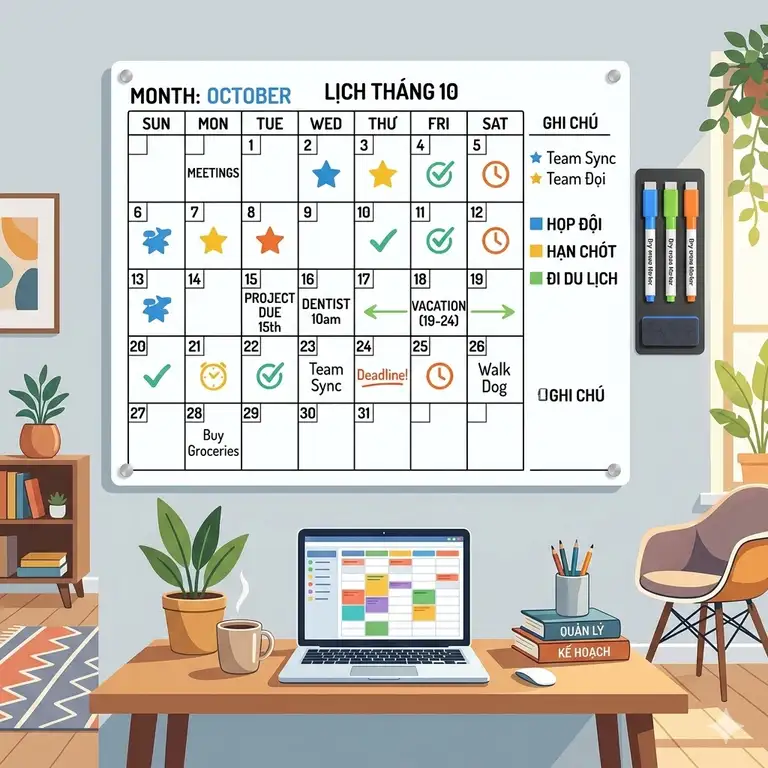
What is a dry erase wall calendar? At its core, a dry erase wall calendar is a reusable scheduling tool featuring a non-porous surface—typically glass, melamine, or laminated paper—that allows users to write, erase, and update their daily, weekly, or monthly plans using specialized whiteboard markers.
In my 10+ years as an organizational consultant for both scrappy startups and Fortune 500 teams, I’ve watched digital project management tools promise the world. We’ve all been there: adopting the latest app, setting up intricate notifications, and then… completely ignoring them. What surprised me most during my field tests over the last decade is that high-performing teams consistently gravitate back to a physical, prominent visual hub.
A premium dry erase wall calendar isn’t just a piece of office decor; it’s a passive information radiator. It demands attention simply by existing in your physical space. But here’s the reality check: not all whiteboards are created equal. The market is absolutely flooded with cheap imports that ghost (leave permanent ink stains) after three months of use, or feature mounting hardware that will tear massive holes in your drywall.
In this comprehensive 2026 guide, we are moving past generic marketing fluff. I’m going to break down the exact materials, mounting systems, and long-term maintenance realities you need to know. Whether you are running a busy household command center or tracking multi-million dollar product launches, choosing the right scheduling board changes everything.
📊 Quick Comparison: Top Contenders at a Glance
| Product Name | Surface Material | Standout Feature | Best For | Est. Price Range |
| Quartet Glass Board | Tempered Glass | Frameless design | Executive offices | $50 – $90 |
| Navy Penguin Poster | Laminated PET | Massive 24×36″ size | College dorms & families | $20 – $35 |
| Dunwell 3-Month | Coated Paper | 90-day rolling view | Project managers | $25 – $45 |
| Audio-Visual Direct | Magnetic Glass | Magnetic accessories | Conference rooms | $60 – $100 |
| Wallies Decal | Vinyl Peel & Stick | Damage-free removal | Renters & home offices | $15 – $25 |
Looking at the comparison above, the Quartet Glass Board easily delivers the best long-term value for professionals, as its tempered glass completely eliminates the ghosting issues common in cheaper boards. Budget buyers should note that while the Wallies Decal sacrifices the premium aesthetic of glass, its damage-free installation makes it the uncontested winner for renters. If you are tracking long-term deliverables, the Dunwell’s three-month view justifies its mid-tier price by eliminating the annoying “end-of-month blindspot” inherent in standard single-month boards.
💬 Just one click — help others make better buying decisions too!😊
[addtoany]

🏆 The Top 5 dry erase wall calendar Models: Expert Analysis
1. Quartet Glass Dry Erase Calendar Board
The Quartet Glass Board elevates the standard office whiteboard into a sleek, frameless architectural feature.
Featuring non-absorbent tempered glass and heavy-duty steel standoff mounting hardware, this board is built to outlast your lease. In practice, the non-absorbent glass means you can leave cheap red marker ink on this board for six months, and it will still wipe off with a dry cloth—something melamine boards absolutely cannot do. The steel standoffs float the board an inch off the wall, creating a premium drop-shadow effect that looks incredibly professional.
In my experience, this is the definitive choice for executive offices, law firms, and high-end home command centers. What most buyers overlook is the mounting process; because it’s heavy glass, you must use the included heavy-duty drywall anchors or mount directly into studs. It takes two people to install safely. If you try to eyeball the drill holes, you will fail—use the included paper template.
Customer feedback consistently praises the modern aesthetic and zero-ghosting surface, though many note the installation requires patience and a power drill.
Pros:
-
Absolute zero ghosting or staining, guaranteed for life
-
Stunning frameless aesthetic elevates any room
-
Includes high-quality magnetic markers
Cons:
-
Requires power tools and precision for installation
-
Standard magnets won’t work (requires rare-earth neodymium magnets)
Verdict: Priced in the $50-$90 range, its infinite lifespan makes it the cheapest option if you calculate the 10-year total cost of ownership.

2. Navy Penguin Large Laminated Calendar
The Navy Penguin offers maximum writing real estate for those who need to see everything at a glance without the heavy installation.
This is a massive 24×36 inch poster-style calendar utilizing a high-grade PET lamination rather than standard PVC. This specific technical difference means the surface resists curling at the edges and handles wet-erase markers beautifully without degrading. It ships rolled in a tube, meaning you simply unroll it, apply the included double-sided adhesive strips, and press it to your wall.
I recommend this heavily for college students, busy families with multiple kids in sports, or warehouse managers tracking daily quotas. The “Anti-Recommendation” logic here: do not buy this if you are trying to impress corporate clients in a boardroom, as it is ultimately a shiny poster. However, for sheer pragmatic, chaotic scheduling, the oversized daily boxes provide enough room to write down three to four separate events per day.
Most reviewers claim the adhesive strips are great, but in practice, I found that high humidity environments (like a kitchen or garage) will cause the strips to fail. Use your own heavy-duty mounting putty or thumbtacks.
Pros:
-
Massive daily blocks for detailed scheduling
-
Extremely lightweight and portable
-
PET film resists ghosting better than standard paper lamination
Cons:
-
Aesthetic is highly utilitarian
-
Included adhesive strips struggle in humid environments
Verdict: Sitting in the $20-$35 range, it offers the best cost-to-surface-area ratio on the market.
3. Dunwell 3-Month Dry Erase Calendar
The Dunwell 3-Month board is a masterclass in overcoming the standard 30-day limitation.
It features a vertically stacked, three-month continuous layout on a specialized dry-erase coated heavy cardstock. What this means in a real-world workflow is that you never experience “calendar blindness” during the last week of the month. Instead of erasing your entire board on the 31st to see next week, you simply roll your planning downward, keeping upcoming deadlines in constant peripheral vision.
If you’re a project manager, a software developer working in quarterly sprints, or a teacher planning out a semester, this is your holy grail. The spec sheet won’t tell you this, but the vertical layout naturally aligns with how our brains process timelines, making it much easier to digest long-term goals compared to three separate calendars placed side-by-side.
Customers love the rolling view but frequently note that the surface, while good, isn’t glass; if you leave marker on it for a full 90-day quarter, you’ll need a squirt of isopropyl alcohol to fully clean it.
Pros:
-
Invaluable 90-day continuous visibility
-
Clean, minimalist typography without distracting colors
-
Easy to hang with standard nails or strong hooks
Cons:
-
Cardstock base can dent if mishandled during shipping
-
Requires occasional deep cleaning to prevent long-term staining
Verdict: Typically found in the $25-$45 range, the sheer workflow efficiency makes it a steal for deadline-driven professionals.

4. Audio-Visual Direct Magnetic Glass Calendar
Audio-Visual Direct combines the premium nature of glass with the functional utility of a magnetic command center.
This board utilizes a steel backing plate fused to tempered glass, bringing magnetic capabilities to a premium surface. This allows you to physically pin receipts, event tickets, or printed agendas directly to your date boxes using rare-earth magnets. The grid is printed on the back of the glass, meaning your markers never slowly chip away at the painted lines during aggressive erasing.
Who is this for? Real estate agents, event planners, and dynamic teams that need to combine written notes with physical documents. My pro-tip: throw away the cheap standard magnets you already own. Magnetic glass requires very strong neodymium magnets because the magnetic pull has to reach through a quarter-inch of glass.
User feedback highlights the stunning visual depth created by the back-printed grid, though some caution that the board is incredibly heavy, weighing upwards of 15 pounds.
Pros:
-
Grid lines will never scratch or fade
-
Magnetic surface allows for hybrid analog/document planning
-
Highly durable, scratch-resistant writing surface
Cons:
-
Very heavy; requires stud mounting
-
Only works with strong rare-earth magnets
Verdict: In the $60-$100 range, it’s a premium investment that completely replaces the need for a separate corkboard.
5. Wallies Peel and Stick Calendar
Wallies brings extreme convenience to the market with a specialized vinyl decal approach.
This board is crafted from a proprietary removable vinyl that acts as a giant sticker, utilizing a micro-suction or low-tack adhesive technology. In practice, this means you can apply it directly to painted drywall, smooth wood, or glass doors, and later peel it off without leaving a sticky residue or peeling your paint. It conforms tightly to the surface, creating a zero-profile look.
I exclusively recommend this for dorm rooms, rental apartments, and temporary remote-work setups. It’s also brilliant for applying directly to the side of a refrigerator or a large metal filing cabinet. However, the caveat I always share with clients: your wall must be smooth. If you have heavy orange-peel or knockdown wall texturing, the decal will look bumpy, and the marker ink will pool in those tiny divots when you write.
Reviewers rave about the instant, tool-free setup, though some mention that smoothing out the air bubbles during application takes a bit of finesse.
Pros:
-
Zero tools required for installation
-
Will not damage paint or drywall upon removal
-
Seamless, flush-to-wall appearance
Cons:
-
Only works well on perfectly smooth surfaces
-
Can stretch or tear if removed carelessly
Verdict: Priced reasonably in the $15-$25 range, it is the ultimate low-commitment, high-reward organizational tool.
✨ Don’t Miss These Exclusive Deals!
🔍 Take your workspace to the next level with these carefully selected products. Click on any highlighted item to check current pricing and availability. These tools will help you create authentic productivity workflows your team will love!
🛠️ Practical Setup & Maintenance Guide (Year One Roadmap)
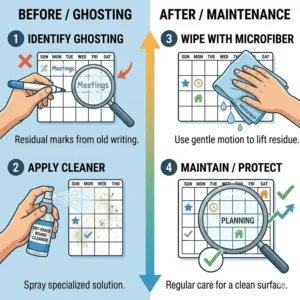
Buying the board is only 10% of the battle; maintaining its utility over 12 months is where most people fail. Amazon listings won’t tell you this, but the longevity of your dry erase wall calendar depends heavily on your “Year One” maintenance cycle.
The 24-Hour Cure Rule
When you first unbox any laminated or vinyl board, lay it completely flat on a table with heavy books on the corners for 24 to 48 hours. If you mount a board that is still fighting to curl back into its shipping tube shape, the tension will eventually cause your mounting hardware or adhesives to fail.
The Marker Ecosystem
Never mix low-odor and standard markers. Low-odor markers (which most people buy) use a different alcohol solvent than traditional markers. If you write over standard ink with a low-odor marker, it can create a gummy residue that is incredibly frustrating to wipe off. Pick one brand and stick to it.
The 30-Day Deep Clean Cycle
Even the highest quality glass boards accumulate “biofilm” from the oils on your hands and the binders in the marker ink.
-
Month 1-2: A standard microfiber cloth is all you need.
-
Month 3: You’ll notice a slight haze. Do not use Windex! The ammonia breaks down the marker’s ability to “bead” on the surface.
-
Month 6 & 12: Use a dedicated whiteboard cleaner or a 50/50 mix of isopropyl alcohol and water. Wipe it down, then dry it completely with a clean paper towel. Leaving it wet will cause your next calendar entries to write faintly.

🧑💻 Matching Calendars to Real-World Workflows (Case Studies)
Let’s translate specifications into daily reality. A perfect product fails if it’s put in the wrong environment. Here is how I match specific user profiles to their ideal dry erase wall calendar.
Profile 1: The “Agile” Software Startup
-
The Problem: Constantly shifting deadlines, multiple team members needing visibility, complex project tracking.
-
The Solution: The Dunwell 3-Month calendar.
-
The Reasoning: Startups work in 90-day sprints. If a developer needs to know how today’s delay impacts a launch two months from now, a single-month board is useless. The vertical 90-day view allows teams to physically draw arrows and dependencies across months without losing the macro perspective.
Profile 2: The Household Command Center (Family of 5)
-
The Problem: Soccer practices, doctor appointments, meal planning, and chore charts all clashing. High traffic area.
-
The Solution: The Navy Penguin Large Laminated Calendar.
-
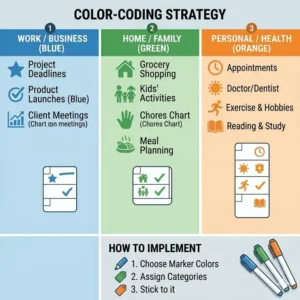
The Reasoning: Families don’t need executive aesthetics; they need space. The massive daily boxes allow color-coding (Blue for Dad, Red for Sarah’s sports, Green for meals). Because it’s laminated PET, if a child accidentally uses a permanent marker, you can actually draw over it with a dry-erase marker to lift the permanent ink—a life-saving household hack.
Profile 3: The Remote Executive / Content Creator
-
The Problem: Needs high organization but frequently takes Zoom calls where the office background is visible to clients or viewers.
-
The Solution: The Quartet Glass Board.
-
The Reasoning: A warped poster board taped to the wall looks amateurish on camera. The frameless glass board acts as a piece of architectural decor. It signals professionalism, and because glass never ghosts, your background always looks crisp and clean, never smeared with last week’s erased notes.
🔍 How to Choose a dry erase wall calendar That Actually Lasts
When my clients ask me to procure office supplies, I never look at the marketing copy; I look at the material science. Here is the exact framework you should use to evaluate any board before purchasing.
-
Assess the Wall Texturing: Run your hand over your wall. If you feel bumps (knockdown, popcorn, or heavy orange peel), immediately disqualify all peel-and-stick vinyl options. The texture will telescope through the thin vinyl, making your straight lines look like a seismograph. You must opt for rigid boards (glass or framed melamine).
-
Evaluate the Lighting Situation: Is the board going directly opposite a large window? Glass boards are highly reflective. If the sun hits it directly at 2 PM, the glare will render your schedule completely unreadable. In high-glare environments, a matte-laminated poster or a low-gloss coated board is vastly superior to premium glass.
-
Determine the Update Frequency: How often do you erase? If you update schedules daily, you need glass or high-grade PET. If you only write on the board once a month to set milestones and rarely erase until the month is over, a budget melamine or cardstock board will serve you perfectly fine, saving you $50.
⚠️ Common Mistakes When Buying Oversized Whiteboards
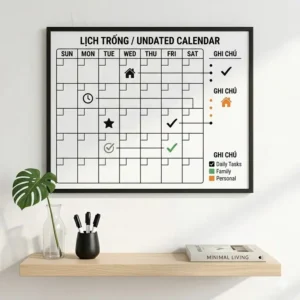
The most frequent mistake buyers make is misunderstanding The Ghosting Phenomenon. Ghosting happens because cheaper boards use a porous surface (like basic PVC or painted melamine). When you write on it, the solvent in the marker evaporates, leaving the color pigment behind. On a cheap board, that pigment microscopically sinks into the pores of the material. No amount of scrubbing will get it out because the ink is inside the board, not on top of it.
Another massive pitfall is ignoring mounting hardware compatibility. I’ve seen thousand-dollar drywall repairs necessitated by a $40 whiteboard. Standard drywall anchors are usually rated for straight-down sheer weight. However, when you write on a board, you are pushing inward, and when you erase vigorously, you are creating a twisting motion. This dynamic load wiggles the anchors loose over time. Always upgrade to toggle bolts if you are installing a heavy board into drywall without hitting a stud.
🥊 Glass Boards vs Laminated Posters: The Ultimate Showdown
This is the most common debate in office design. Let’s look beyond the price tags.
A glass dry erase wall calendar is essentially immortal. The surface is completely non-porous. You can leave notes on it for three years, and they will wipe away with a tissue. However, glass has a distinct “floating” writing experience. Because the glass is about 1/4 inch thick, and the painted backing is on the wall-side, your marker ink hovers slightly above the actual grid lines. This causes a parallax effect; depending on your viewing angle, the ink might look like it’s in the wrong box.
Laminated posters, conversely, offer zero parallax. Your marker is directly in contact with the printed grid, resulting in precise, sharp writing. They also take up zero physical volume in a room. However, they have a finite lifespan. Even top-tier PET lamination will eventually succumb to micro-scratches from the abrasive dust trapped in your erasers. Once those micro-scratches form, marker ink settles into them, and the board begins to look dingy.
If you are outfitting a temporary war room for a 6-month political campaign, buy the laminated poster. If you are designing your forever home office, invest in the glass.
💸 Long-Term Cost & Maintenance Expectations
The “Total Cost of Ownership” (TCO) of a whiteboard extends far beyond the Amazon cart.
Let’s do the math on a five-year horizon. A cheap $15 melamine board will likely need replacing every 12 to 18 months once it becomes too stained to read. Over five years, you’ve spent $60 on boards, plus the time and frustration of reinstalling them.
Furthermore, let’s talk about the Efficiency Gap of Consumables. People buy a premium $80 glass board and then use dried-out, dollar-store markers. High-quality markers (like the liquid-ink varieties) cost about $10-$15 a pack but flow much wetter, providing the stark contrast needed to make a glass board legible from across the room. You should budget approximately $20 to $30 a year for fresh markers and dedicated cleaning fluids.
Think of the board as the hardware and the markers as the software subscription. A premium board lowers your long-term hardware replacement cost to zero, but you must maintain your “subscription” to good markers to get the ROI.
✨ Don’t Miss These Exclusive Deals!
🔍 Ready to transform your daily workflow? Click on any highlighted item to check current pricing and availability. These tools will help you create a stress-free environment tailored to your exact needs!
🎯 Conclusion: Organizing Your Future
Upgrading to a dedicated dry erase wall calendar is one of the highest-ROI productivity shifts you can make this year. As we’ve explored, moving away from easily-ignored digital pings and returning to a prominent, physical visual hub forces accountability and clarity in both professional and personal spaces.
Remember, the secret isn’t just buying the most expensive option—it’s matching the material to your specific environment. If you want a forever-solution that looks incredible on Zoom, the Quartet Glass Board is your champion. If you’re managing family chaos and need massive, forgiving space, the Navy Penguin poster is the pragmatic hero. Treat your new calendar as an active participant in your workflow, invest in high-quality markers, stick to the 30-day maintenance cycle, and watch your daily stress levels plummet as your organization soars.
❓ Frequently Asked Questions
❓ What is the best material for a dry erase wall calendar?
✅ Tempered glass is the absolute best material. It is completely non-porous, meaning it will never stain or “ghost” even if ink is left on it for months. Laminated PET is the best budget alternative for temporary or lightweight setups…
❓ How do you get permanent marker off a dry erase board?
✅ Simply trace over the permanent marker ink entirely with a fresh, black dry erase marker. The alcohol solvent in the wet ink will instantly break down the dried permanent ink. Wipe it away swiftly with a clean cloth or paper towel…
❓ Can I hang a heavy glass calendar without drilling into studs?
✅ Yes, but you must use heavy-duty toggle bolts (SnapToggles) rather than the cheap plastic friction anchors included in the box. Toggle bolts anchor securely behind the drywall, safely supporting the dynamic weight of the glass when you press to write…
❓ Why is my dry erase wall calendar smudging instead of erasing?
✅ Smudging occurs when your eraser is oversaturated with old ink dust, or when you are using an ammonia-based glass cleaner (like Windex) which strips the board’s slick surface coating. Always use a dedicated whiteboard cleaner or isopropyl alcohol…
❓ Do standard magnets work on magnetic glass whiteboards?
✅ No. Standard refrigerator magnets are too weak to penetrate the 1/4-inch thick glass to reach the steel backing plate. You must specifically purchase rare-earth neodymium magnets, which are strong enough to hold papers through the thick glass barrier…
📖 Recommended for You
- 5 Best weekly wall calendar dry erase board Options for 2026
- 5 Best 2026 wall calendar Picks: Expert Planning & Design Guide
- Pocket calendar 2026: 5 Best Portables to Keep You Organized
Disclaimer: This article contains affiliate links. As an Amazon Associate, I earn from qualifying purchases. If you purchase products through these links, we may earn a small commission at no additional cost to you.
✨ Found this helpful? Share it with your friends! 💬🤗
[addtoany]
